Search This Blog

Showing posts with label German Expressionism. Show all posts

Thursday, June 14, 2012

German Expressionism: Vol. 5


The German Expression movement began before WWI and gained momentum in the 20’s and 30’s. It influenced architecture, painting and cinema. This movement gave surrealistic shape and structure to forms that reflect psychological states. This is evident in the extreme contrast of light and dark, the use of reflective surfaces and abstract optical tricks and even anthropomorphism.

Vol. 4 – BatmanReturns (1992) This is director Tim Burton’s second installment in the film series based on the popular DC Comic Superhero. Michael Keaton returns at the titular hero. But this time, he faces the joint forces of a sinister businessman Max Schreck (Christopher Walken), The Penguin (Danny DeVito) and Catwoman (Michelle Pheiffer). This film is a visual spectacle and was recognized with two Oscar nominations, one for visual effects and one for makeup.

"Batman Returns" exemplifies German Expressionism probably more so than any other film made in the past several decades. Tim Burton (for all of his shortcomings) is one of the most expressionistic filmmakers in modern history and probably of all time. His films are highly influenced by the German cinema of the 20’s and 30’s, so much so that he even named one of the characters in this film (Max Schreck) after the actor that portrayed F.W. Murnau’s “Nosferatu”
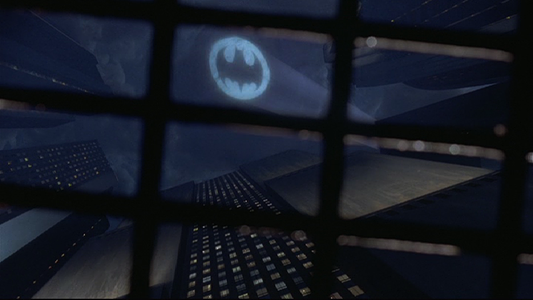
The sets created for Gotham have a personality all to their own. The menacing architecture of the city looms ominously over its subjects creating a dark and oppressive environment very similar to the world of Fritz Lang’s “Metropolis”. Selina Kyle’s apartment and the Penguin’s Lair also have their own defining characteristics meant to reflect the personalities of the characters. Kyle’s apartment is small and closed in, covered in pink with a giant ugly I-beam protruding from the ceiling, constantly reminding her of how feeble her attempts are at brightening up her dreary existence. The Penguin’s Lair is an elaborate frozen cave where he resides with his minions of giant penguins that do his biddings. He sits on a large throne complete with a kneeling pillow at his feet. It’s as if his delusions of grandeur have guided his decor in an attempt to allow him to forget his own grotesqueness and the fact that his kingdom is actually frozen, fishy, underground cave.

The anthropomorphism traits of the characters themselves cannot be overlooked either. The costumes and makeup of both The Penguin and Catwoman give them an abundance of animalistic traits that color their alternate personalities. This is especially evident in The Penguin. His elongated, beak-like nose and tuxedo body suit made Danny DeVito look even more like a short, fat, awkward, flightless bird than he does in real life. This exaggeration is a huge departure from previous depictions of this character. Burgess Meredith’s Penguin from the old television series had nothing more than a purple top hat and cigarette holder. And most of the depictions of him in the comics aren’t nearly as drastic as they are in this film.

The duality of man is a common theme in German Expressionism as well as comic books. This is prevalent in the hero as well as both villains of “Batman Returns”. Both Batman and Penguin are alter egos created by the separation from their parents. In our hero’s case, this is caused by murder and led to his incessant vigilantism. The Penguin was abandoned by his parents. His separation anxiety has manifested itself in a vengeful way creating the persona of a super villain trying to make the world pay for the crimes of his father. Catwoman’s personality is the polar opposite of that of Selina Kyle. Kyle is a quiet and shy homely woman that takes a lot of abuse from her employer, Schreck. When she dawns the Catwoman suit, she exudes sexual power and won’t take ‘no’ for an answer.


I imagine most of you have seen this film at least once. I don’t think it’s the greatest but it does give us a great example of Expressionistic cinema in the modern era. It deserves a second look. Watch it for no other reason than to take in the details of a film made with a lot of love for the art that came before it.


Saturday, June 2, 2012

German Expressionism: Vol.4

The German Expression movement began before WWI and gained momentum in the 20’s and 30’s. It influenced architecture, painting and cinema. This movement gave surrealistic shape and structure to forms that reflect psychological states. This is evident in the extreme contrast of light and dark, the use of reflective surfaces and abstract optical tricks and even anthropomorphism.

Vol. 4 – The Saddest Music in the World (2003) – This film, set in Winnipeg during the Great Depression centers around a contest held by the local beer baroness, Lady Helen Port-Huntly (Isabella Rossellini) to find the saddest music in the world. Among the contestants we meet Fydor Kent (David Fox): a WWI vet and former doctor representing Canada and his son Chester Kent (Mark McKinney): a big shot musical producer representing America. We also meet the melancholic Roderick Kent (Ross McMillan): Fydor’s estranged son who comes to Winnipeg to represent Serbia after his wife left him and Narcissa (Maria De Medeiros): Chester’s sleepwalking, nymphomaniac Serbian girlfriend.

Don’t worry if you didn’t follow that weird plot synopsis. Trust me, the details acquired from watching the film will only make this story more bizarre. It may not be a German film but I wanted to talk about it to show how the movement has influenced some more recent cinema. Director Guy Maddin is one of the most expressionistic film makers of the modern age and this film showcases that aspect of his style very well. I haven’t seen all of his work but surprisingly, this is actually one of his more accessible movies.

This film exhibits both surreal and expressionistic qualities.  It is not a dream but rather exists in a constant dream like state created by the filmmaker’s techniques. It was shot with several different film stocks and portions of it are black and white with an extremely grainy texture. This is used to emphasize both the time and place that this story is set. The grainy look gives it the feel of an old timey news reel and the stark black and white contrast accentuates the extreme cold of a Winnipeg Winter. At times, he even adds a more foggy effect by smearing Vaseline on the camera lens. He also mixes in an assortment of various color tinted filters from time to time.

Other parts of the movie are shot in very brilliant contrasting colors. Notably, one of the first color scenes we find in this film is at a funeral. It seems as though there he adds more color to the screen in the scenes that showcase more spectacle and performance. The funeral is the first, and then later we see more color in the scenes that show the contest. I’m not exactly sure if I understand the rhyme or reason for everything Maddin is doing here but it makes for an amazing visual experience.

If you’ve never experienced a Guy Maddin film, I would suggest you start with this one. It’s actually a bit less obscure than a lot of his other work but it still manages to give you a great taste of what type of stuff you will find in his filmography and it’s currently available on NetflixWatch Instantly. It’s also worth noting that I think this film is hilarious. Each character is just a bit weirder than the last making this the type of film that you find lines like: “Sadness is just happiness turned on its ass.” And “No, I'm not an American. I'm a nymphomaniac.”


Enjoy.

Tuesday, May 15, 2012

German Expressionism: Vol. 3


The German Expression movement began before WWI and gained momentum in the 20’s and 30’s. It influenced architecture, painting and cinema. This movement gave surrealistic shape and structure to forms that reflect psychological states. This is evident in the extreme contrast of light and dark, the use of reflective surfaces and abstract optical tricks and even anthropomorphism.

Vol. 3 – The Blue Angel (1930) – This story centers around Professor Rath (Emil Jannings) who gives up his prestigious post at the local university to pursue a lusty cabaret singer, Lola Lola (Marlene Dietrich). His subsequent downfall away from the bourgeois lifestyle and into the lower class seems sure to end only in his demise. This film is also very significant in that it is the first major German sound film and the first collaboration between Director, Josef von Sternberg and Actress, Marlene Dietrich. Their later collaborations would include “The Scarlett Empress”, “Shanghai Express”, “The Devil is a Woman” and several others.

This film is unique in the cannon of expressionism. First of all, the beginning of the story feels much more like a slapstick semi-romantic comedy than you would be accustomed to from the likes of Lang, Pabst or Murnau. Because… you know… we all know how funny and romantic the Germans were in the 1930’s. The character of Rath is ridiculed and taunted by his students, his maid and even a lowly magician. He quickly finds himself the proverbial “bull in the china shop” as he blunders around backstage at the cabaret. At one point he even walks backwards down a spiral staircase. And it’s hard not to take note of Lola Lola’s cackling laughter when he asks for her hand in marriage. All of this being said: this film still showcases many of the tropes of expressionism. Stark contrasts between light and dark, abstract camera angles and lots of reflection shots paint the canvas of this moral tale.

The light and dark of this film actually work in somewhat of an inverted way than what we’ve come to expect from most other films of this movement. As the film begins, we find Professor Rath living a dark existence. He lives in a dimly lit flat and seems to timidly lurk through the shadows of the world outside of his profession. When he meets Lola Lola, she is a bright ray of light, warm and inviting. Instantly smitten, he finds out in due time that all that glitters is not gold. His own demise seems to be directly related to the amount that he pursues this radiance.  The final act epitomizes this relationship. His wife’s betrayal comes at his lowest moment, his first time on stage, the ridiculous buffoon, under the warming glow of the spotlight.


 If you haven’t seen this film, and maybe you’ve avoided the previous installments in this series because of some sort of allergy to silent cinema, I would suggest you check it out. It’s currently available on Netflix Watch Instantly.


Enjoy.

Saturday, May 12, 2012

German Expressionism: Vol.2


The German Expression movement began before WWI and gained momentum in the 20’s and 30’s. It influenced architecture, painting and cinema. This movement gave surrealistic shape and structure to forms that reflect psychological states. This is evident in the extreme contrast of light and dark, the use of reflective surfaces and abstract optical tricks and even anthropomorphism. 

Vol. 2 – Nosferatu (1922) – Transylvania’s Count Orlok (Max Schreck) is in the market for some new real estate in Wisbourgh, Germany. Hutter (Gustav Von Wangenheim) is sent out to his castle to appropriate the deal for a home near his own house. Then things start to get weird. On his journey to the castle, the locals seem afraid to help him; he gets bit on the neck by two “mosquitos really close together” and constantly feels the presence of a dark shadow looming over him. The count then becomes obsessed with Ellen (Gretta Schroder), Hutter’s wife and her beautiful neck and decides to buy the property and become neighbors… Ok you get the point; it’s an adaptation of Bram Stoker’s Dracula or a really original prequel to Joe Dante’s “The Burbs”.


Similar to “Metropolis”, this film could definitely be considered a staple in the German Expressionistic movement. Director F.W. Murnau uses superimposed images, color tinted negative images and obscure camera angles to add more disorientation and overall surrealistic tones to the film. It is this composition of shots that makes this Nosferatu one of the most memorable and discussed films of all time. You may have never seen it but I can almost guarantee that you’ve seen clips from this film. It may have been the moment Count Orlok’s shadow climbs the staircase. Or it could be the image of him first entering Hutter’s room in the castle, stiff like some sort of a zombie rat walking straight towards the camera. My favorite is the shot of him rising from his casket, again stiff as a board, ascending 90 degrees without moving a muscle.

It’s also worth noting that: although Murnau is rightfully considered one of the Fathers of the German Expressionism movement, he wasn’t strictly a surrealist. The line between imagination and reality for him was thin and jagged. As he said:

“I like the reality of things, but not without the fantasy – they must dovetail. Is that not so with life, with human reactions and emotions? We have our thoughts and also our deeds.”

I highly recommend this film to anyone who is interested in the movement or in the history of cinema in general. I would probably say that any film that is considered to epitomize the German Expressionism movement is also very important to film history as a whole. After all, we are talking about a time in which cinema was at the very beginning of defining itself as its own art form and these films were just as much about experimentation and testing the limits of the medium as they were about their own subject matter.

I will also mention that this film is open source so feel free to download a copy. There's a pretty good one here. It is also available to stream on Netflix and Hulu so you really have no excuse.


Enjoy.
(proofread by Dolly Karma)

Tuesday, April 17, 2012

German Expressionism: Vol.1


The German Expression movement began before WWI and gained momentum in the 20’s and 30’s. It influenced architecture, painting and cinema. This movement gave surrealistic shape and structure to forms that reflect psychological states. This is evident in the extreme contrast of light and dark, the use of reflective surfaces and abstract optical tricks and even anthropomorphism.

Vol. 1 – Metropolis (1927) – This story takes place in a futuristic city in which the divide between the ‘haves’ and the ‘have nots’ could not be more stark. The working class is completely subservient to the city planners. Freder, the son of the city’s highest ranking planner falls in love with a Maria, a prophet from the underground workers. Maria strives to join the “hands” – the workers with the “head” – those who have the power. All she and the city needs is a mediator between the two, someone to act as a heart.

There is a reason that I wanted to start this new series after I finished with my last Neo-Noir of the 90’s series. And more specifically, I wanted to talk about this film after “Dark City”, my last entry into that series. As I mentioned, “Dark City” is very highly influenced by this film. In truth, the entire Noir movement as we know it from the American films of the 40’s and 50’s are highly influenced by the German Expressionism films from earlier in the century. In fact, some of the most highly respected filmmakers of the American Noir films were German directors that fled here when Hitler took control of the cinematic industry such as Robert Siodmak (“The Killers”), Billy Wilder (“Double Indemnity”) and the director of this film, Fritz Lang.

 This is definitely considered one of the quintessential films of the German Expressionism movement… and for good reason. The art direction and set design is a whole lot of things. Subtle is not one of them. In this story, Lang has constructed a future that is as oppressive aesthetically as it is thematically. The buildings and roads of the upper city stare down dauntingly with sharp corners and sharp eyes at the lower subjects. The cogs and wheels of the machinery in the lower depths do even more to oppress its inhabitants like an insolent child constantly demanding attention. The cinematography uses abstract angles accenting the structural weight of the set and the editing style bring a chaotic feel to some of the more surreal dreamlike scenes.

This has been one of my favorite films for a long time. A few years ago, a more complete version of the film was found in Buenos Aires with an additional 25 minutes of footage thought to have been lost forever. Kino released this version in 2010 as “The Complete Metropolis”. If you’ve never seen it, I suggest you watch this one. It’s currently available on NetflixWatch Instantly. Restorations like this make me very thankful to live in a time that an 85 year old piece of art can be preserved forever and is so easily accessible. This is a landmark film, not only for its movement but for the entirety of cinematic history and it’s a must watch for those who are interested in learning the complete back story of the films that move them today.


Enjoy.